
NdFeB Magnet Selection Guide
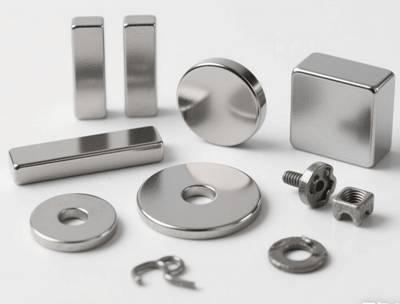
A comprehensive guide to selecting the right NdFeB magnet grade, coating, and shape for your specific application requirements.
Understanding magnetic properties (Br, Hc, BHmax)
Temperature considerations and grade selection
Coating options for different environments
Shape and size optimization
Cost-performance balance
Are Spliced magnets better or whole magnets better?
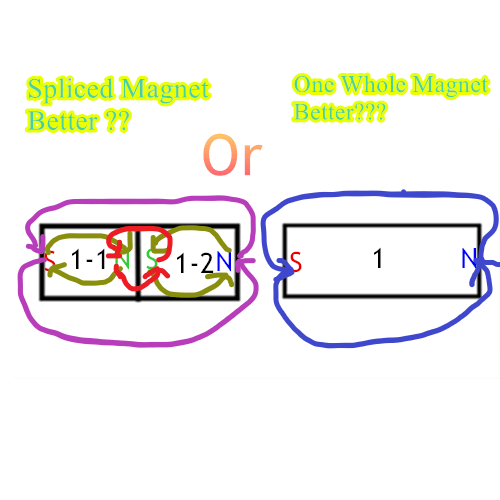
If the magnet properties (including materials, shape, and magnetic properties) of a splicedmagnet are exactly the same as a solid magnet, then the solid magnet will generally have greater magnetic properties in the absence of other factors interfering with it.
The magnet thickness is more thickness better?
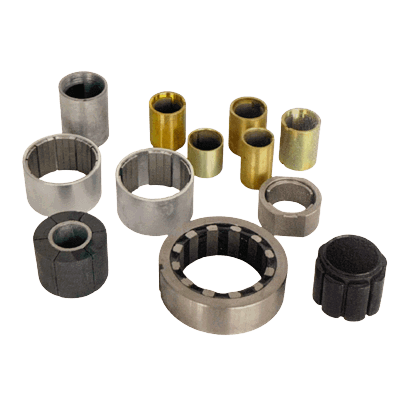
In permanent magnet motors and brushless motors, the thickness of the magnet is not better, but needs to be appropriately selected within a certain range to meet specific performance and design needs. The thickness of the magnet is an important parameter in motor design, affecting the performance and operating characteristics of the motor.
Requirements for the Splicing Magnets
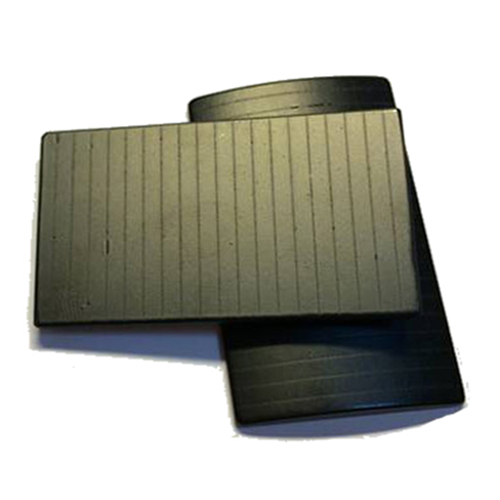
Alignment and Precision: Spliced magnets require very precise alignment to ensure the magnetic field is evenly distributed in the motor.
To be part of a permanent magnetic motor, what are the magnets’ requirements?
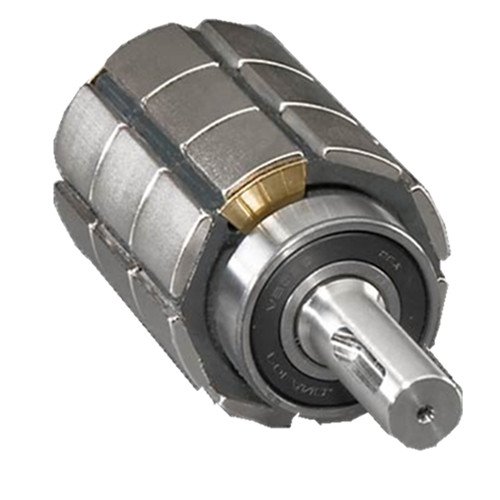
Sintered Neodymium Iron Boron (NdFeB) magnets are very powerful magnets, often with high magnetic properties, but at the same time require special handling and design to meet the requirements of motor applications.
The Sintered NdFeB magnets’ requirements for Windturbine
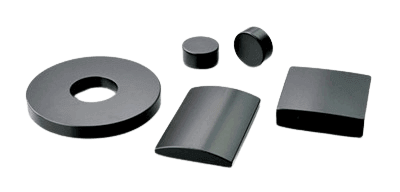
Requirements for sintered NdFeB magnets used in wind turbines:
1. High magnetic performance: It can provide enough magnetic force to generate efficient transmission force. (By testing the relevant elements of magnetic properties)